Sound into image
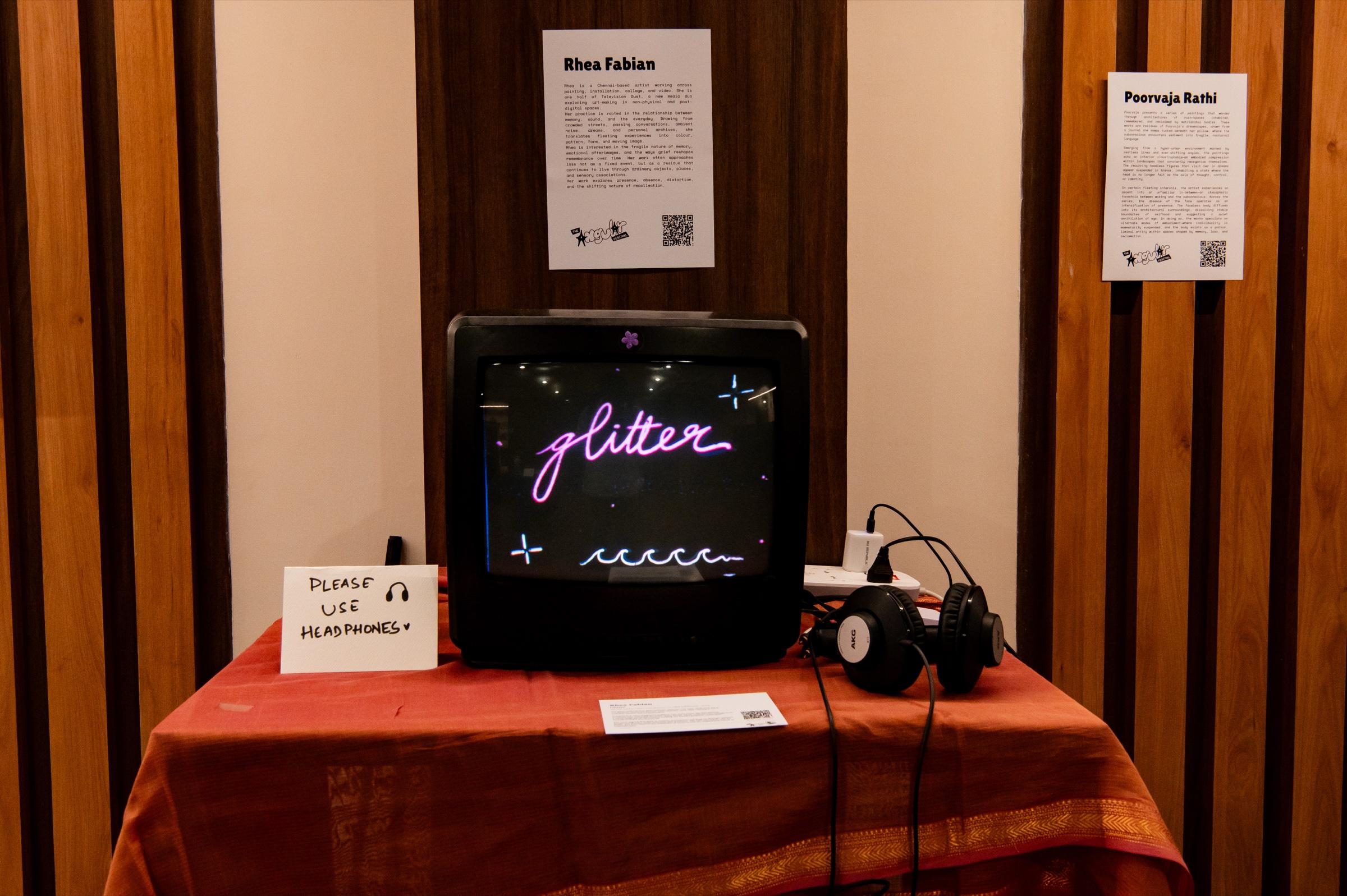
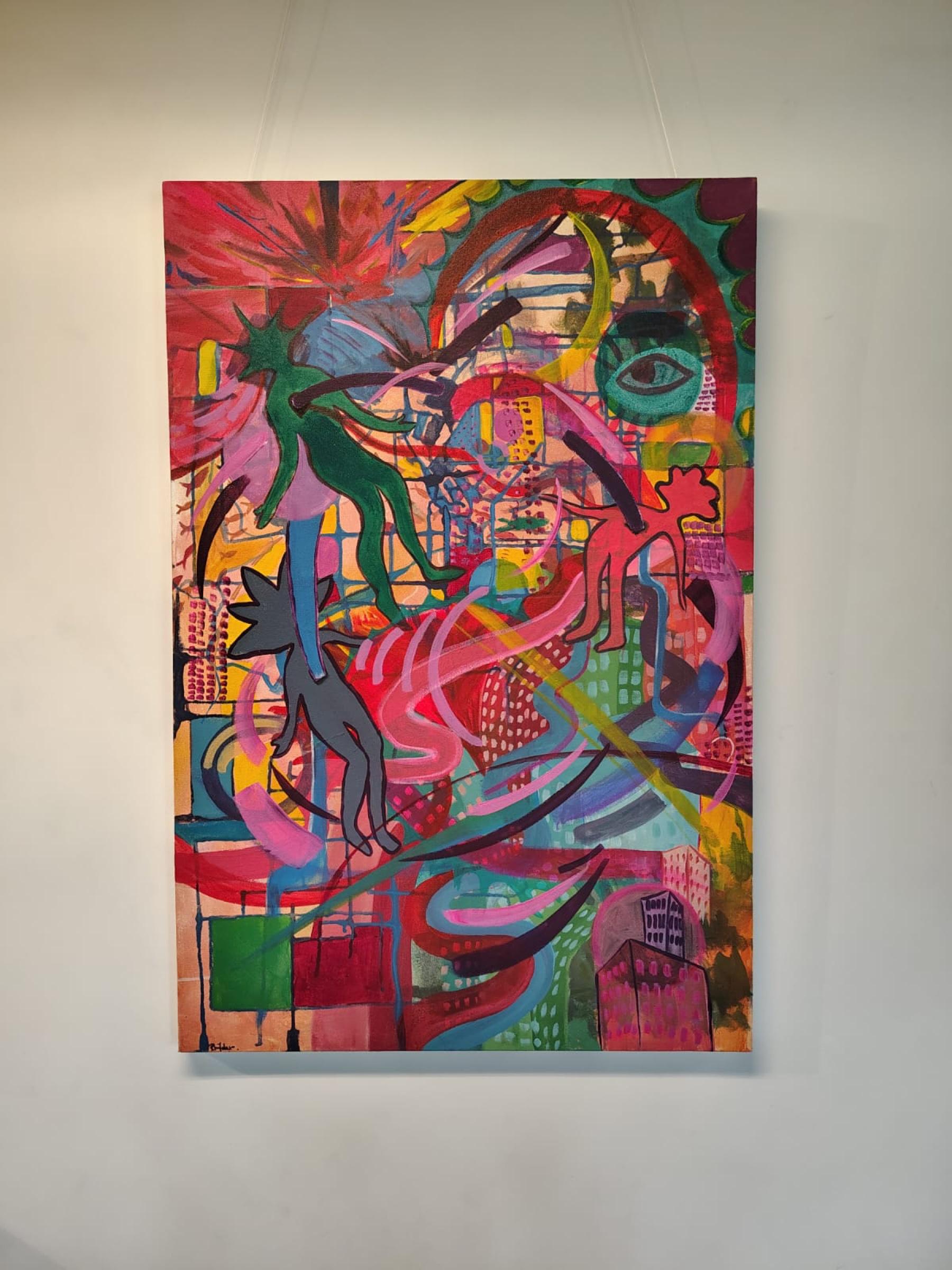
Within the collaboration, Rhea primarily works on translating music and sound into visual ideas. Her role spans artistic direction, developing the visual language and flow of music videos, and shaping how audiences experience and interact with installations.
She works with a combination of visual tools and minimal code, often building on and responding to systems developed by Srinivas.
This collaborative process allows ideas to move freely between art, sound, technology and interaction.
Cathode Ray Spectres
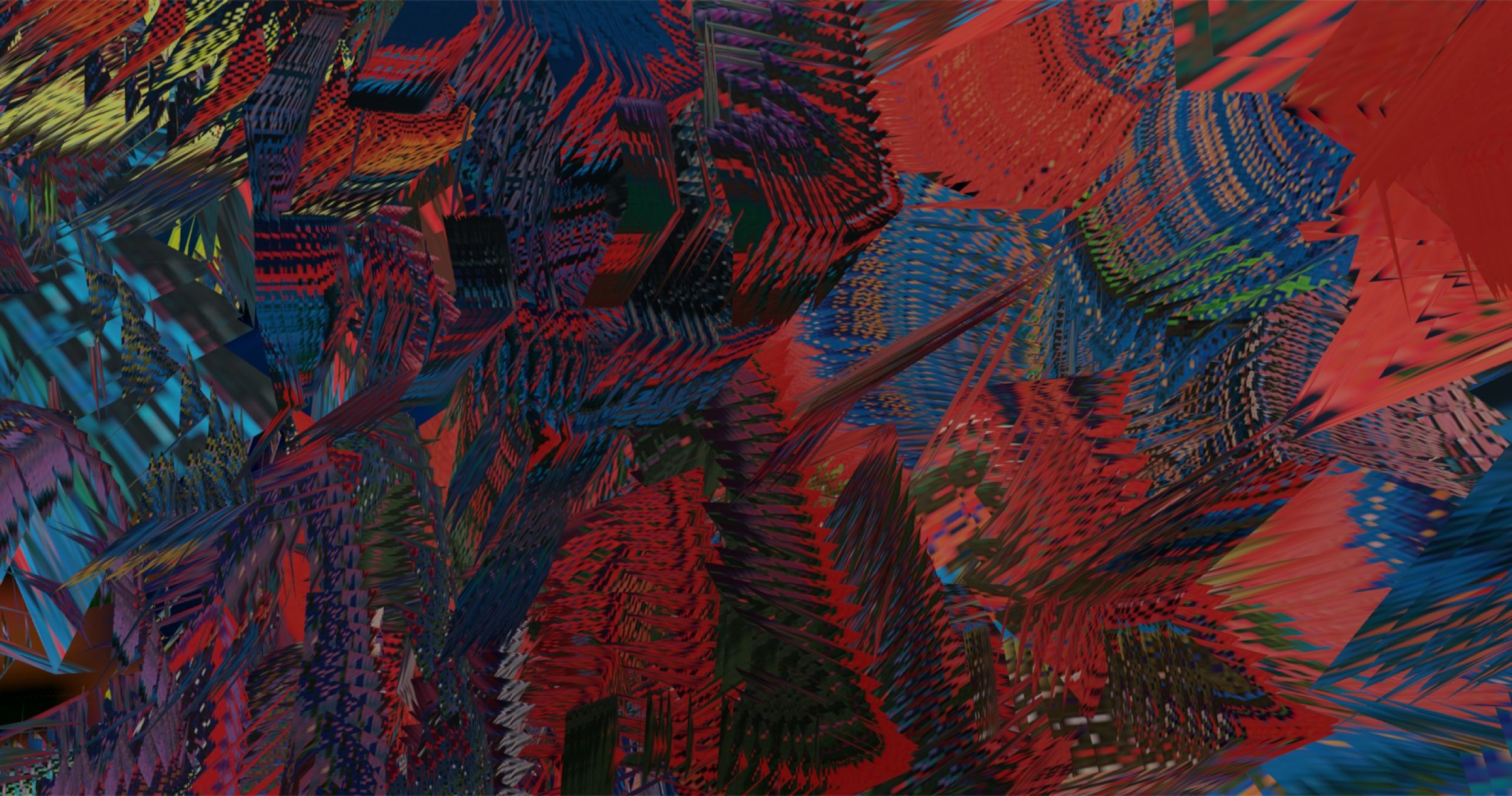
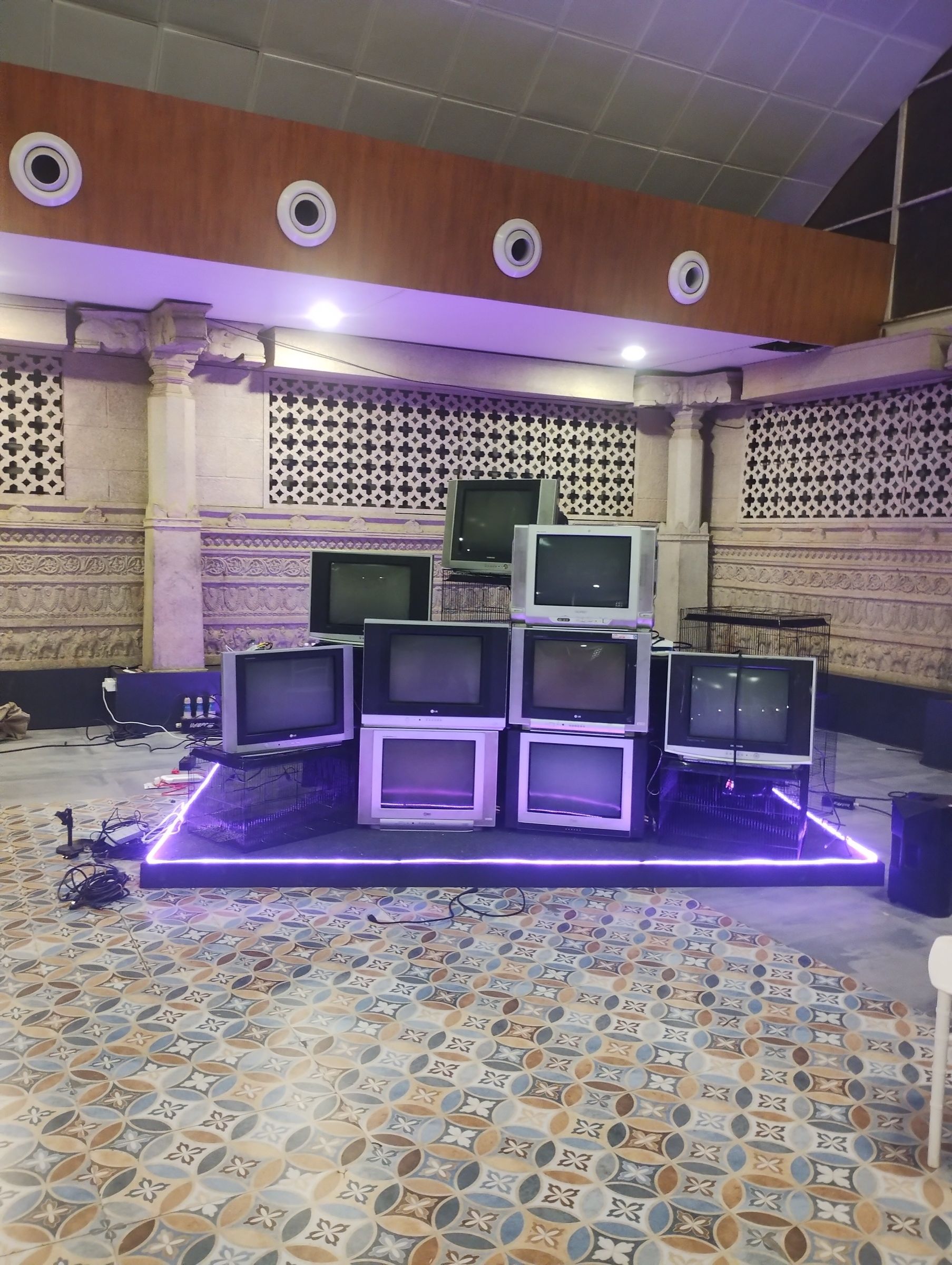
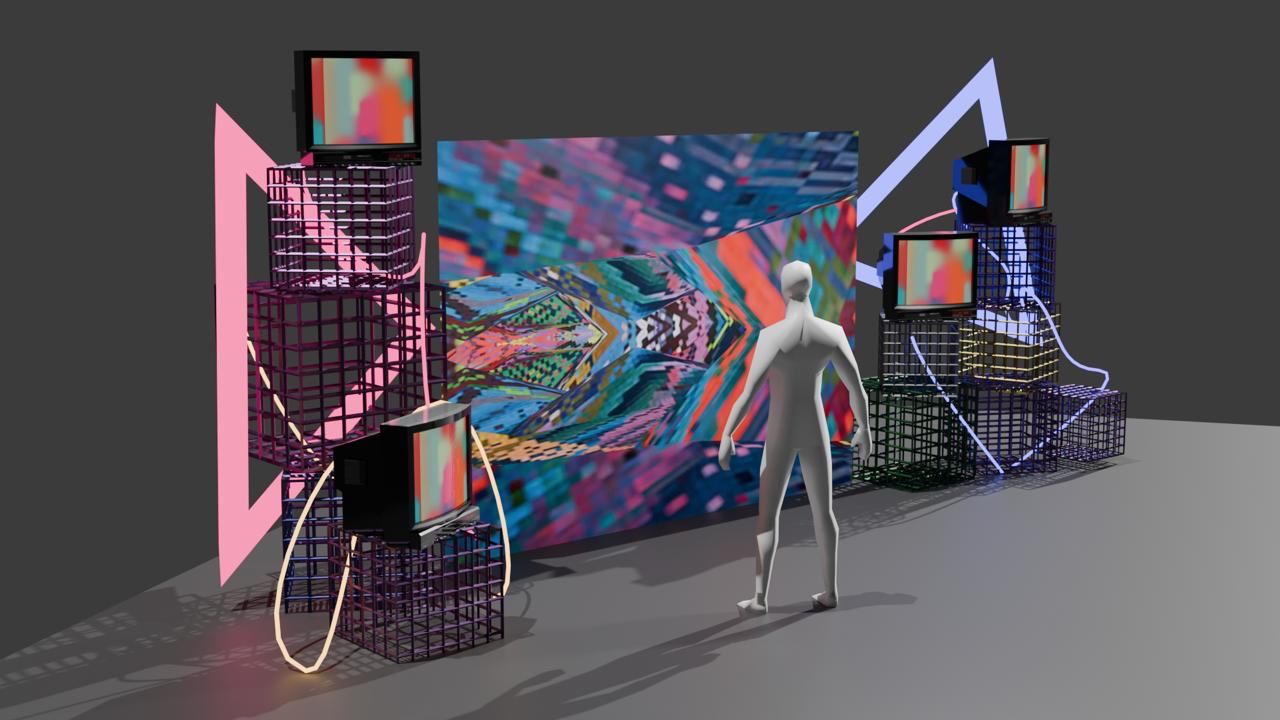
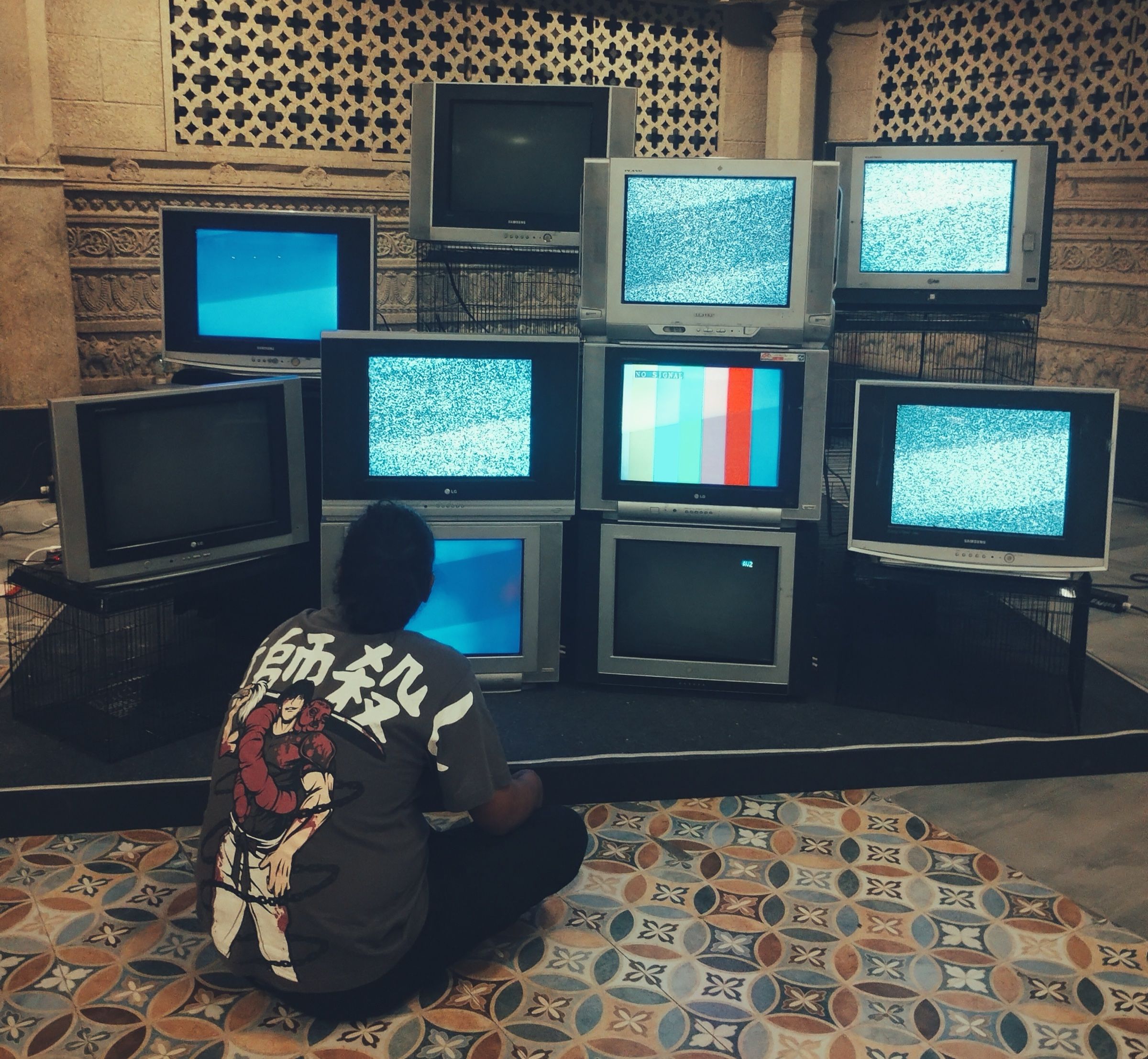
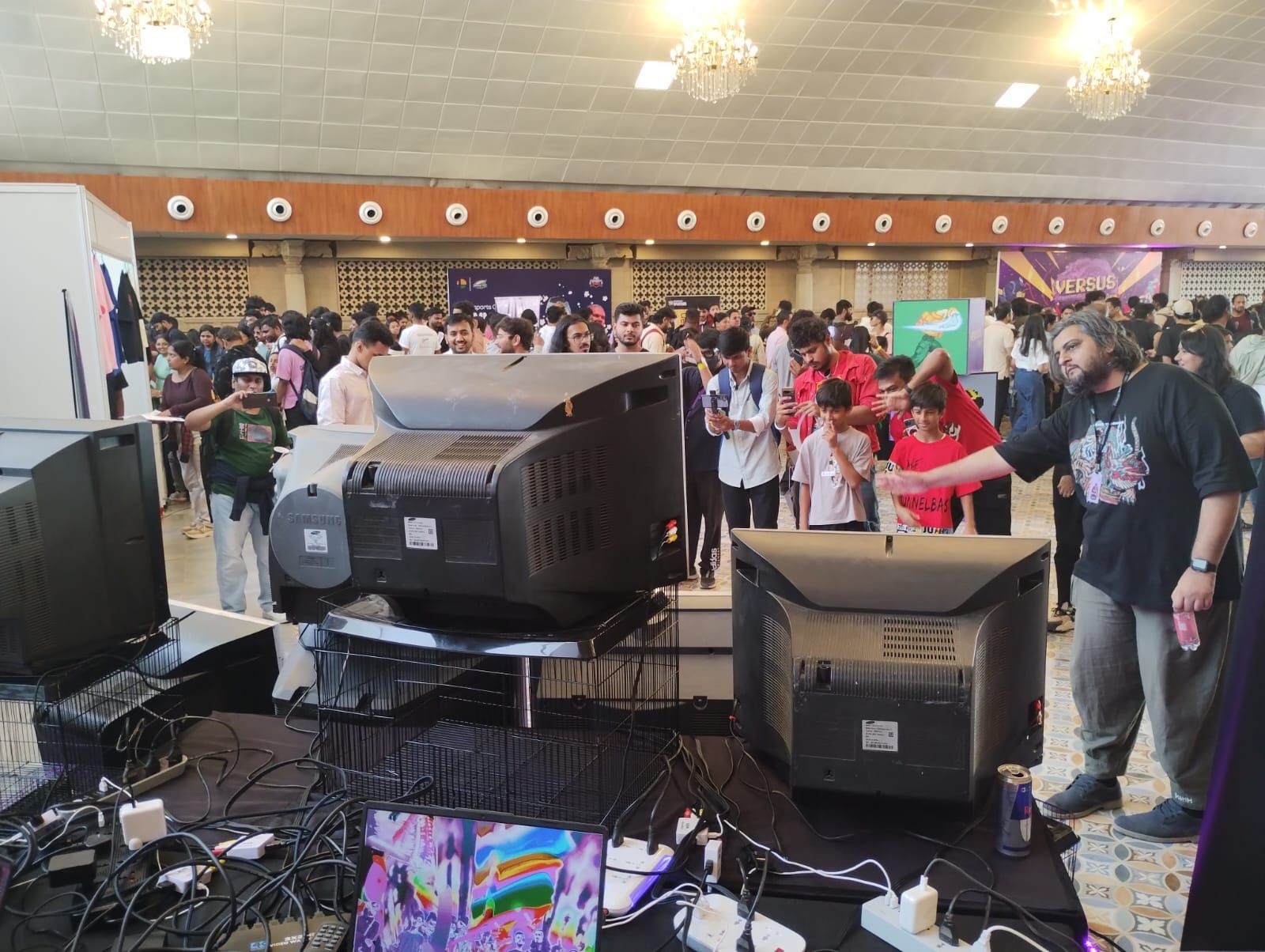
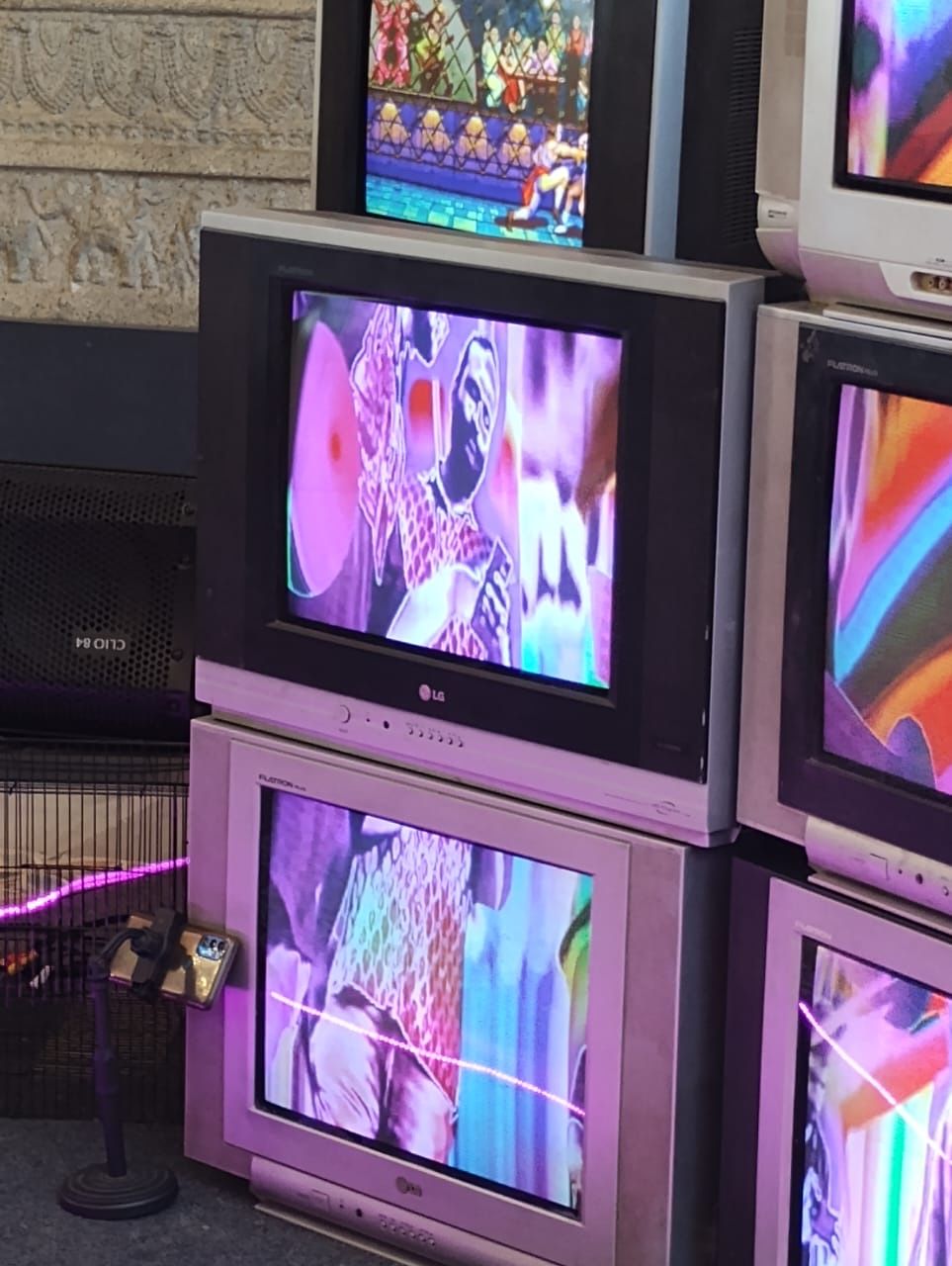
Cathode Ray Spectres is an interactive installation built from a stack of CRT televisions running a live camera feed through a Unity-based visual system. Created over two months for Versus Festival in January 2025, the process included sourcing and testing the obsolete displays as well as building the responsive system.
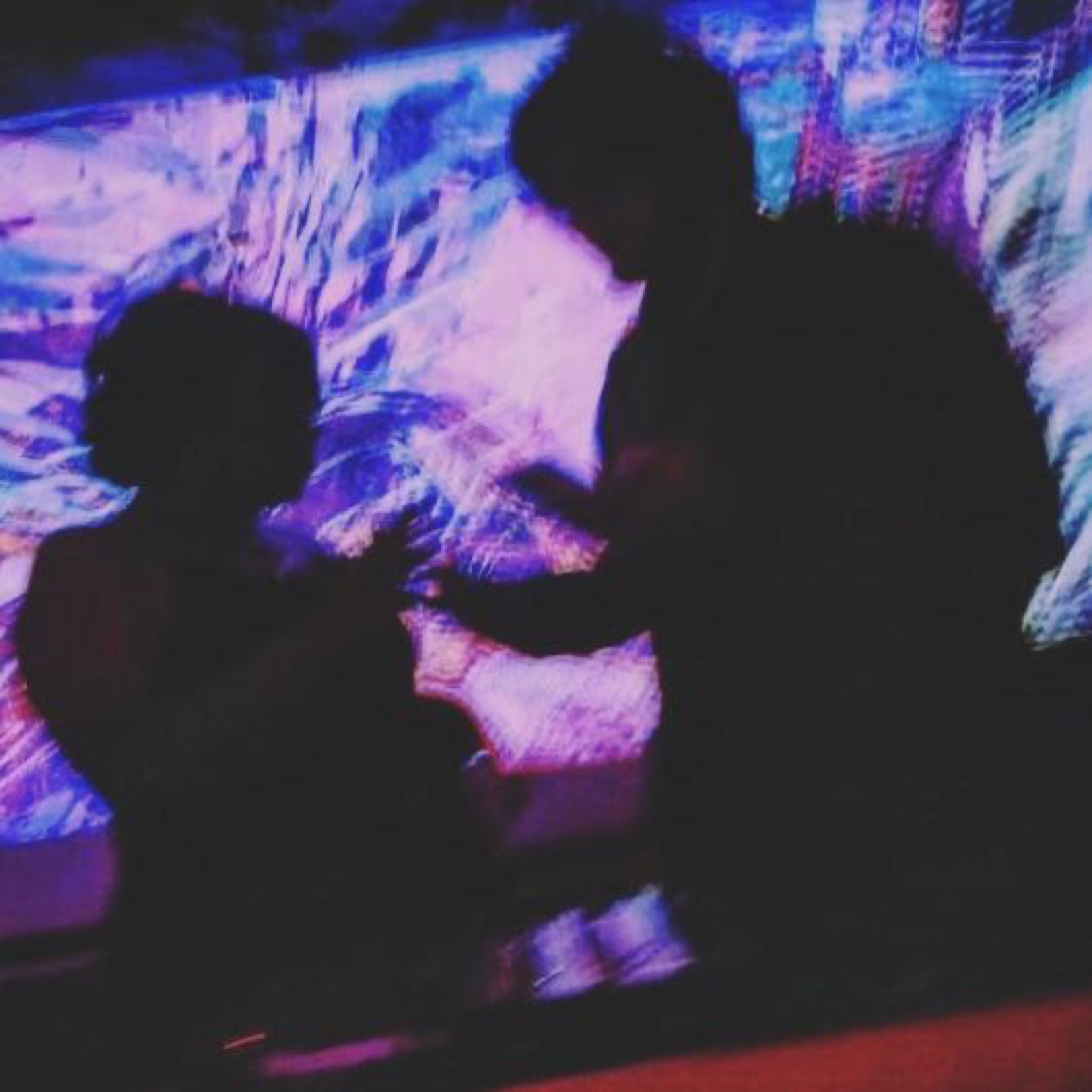
The screens function as a distorted mirror. As viewers move around the space, their image is pulled into the composition, making their presence part of a work that changes continuously depending on who stands before it and how they move.
The use of CRTs references both the visual history of gaming and a wider interest in technological obsolescence. The work considers our relationship with the machines we create, use and eventually leave behind, and asks whether bodies and technologies share something in the experience of becoming outdated, replaced or forgotten.
By placing the viewer inside an obsolete display system, Cathode Ray Spectres reflects on presence, technology and what it means to occupy an increasingly post-human visual space.
Have A Heart?
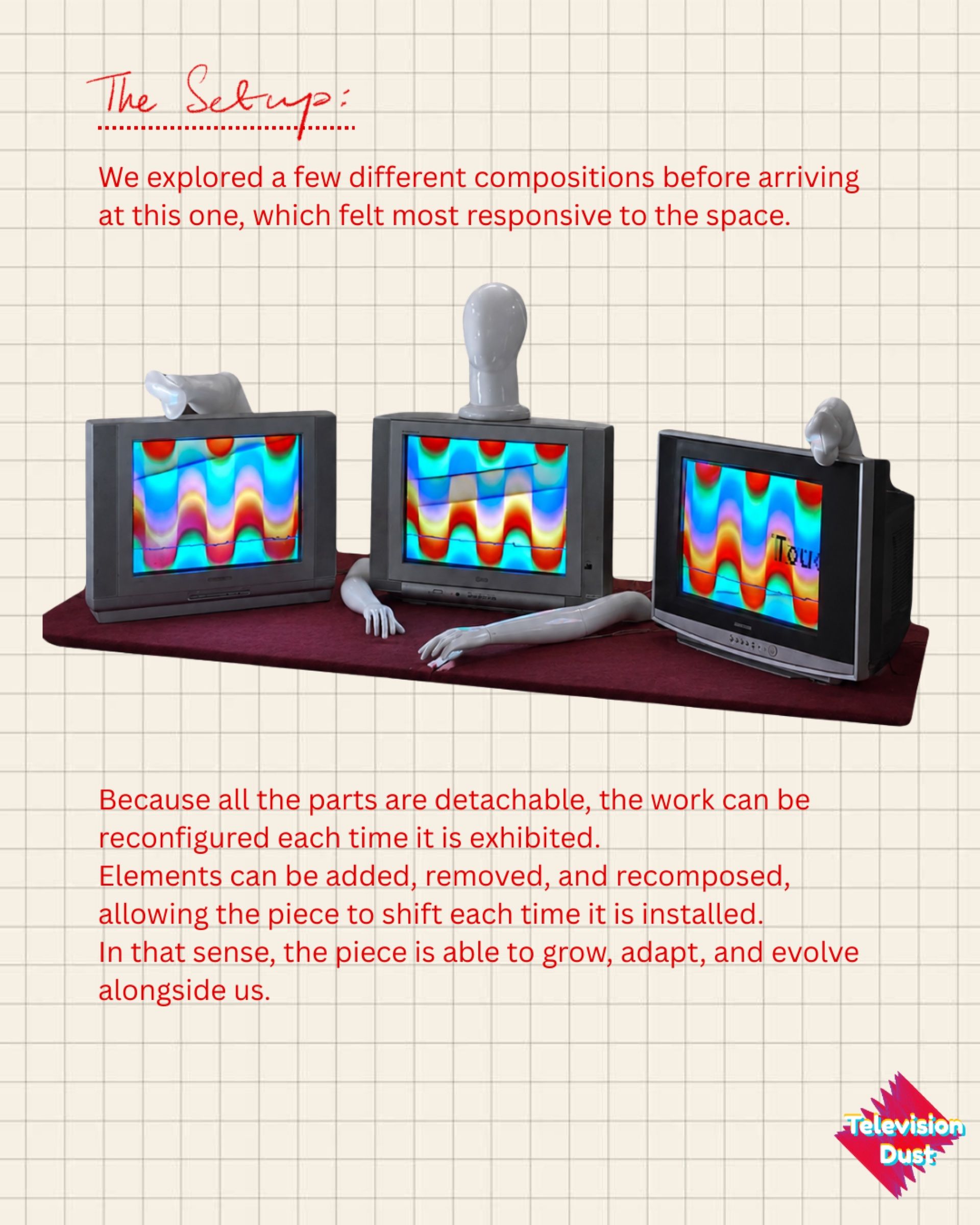
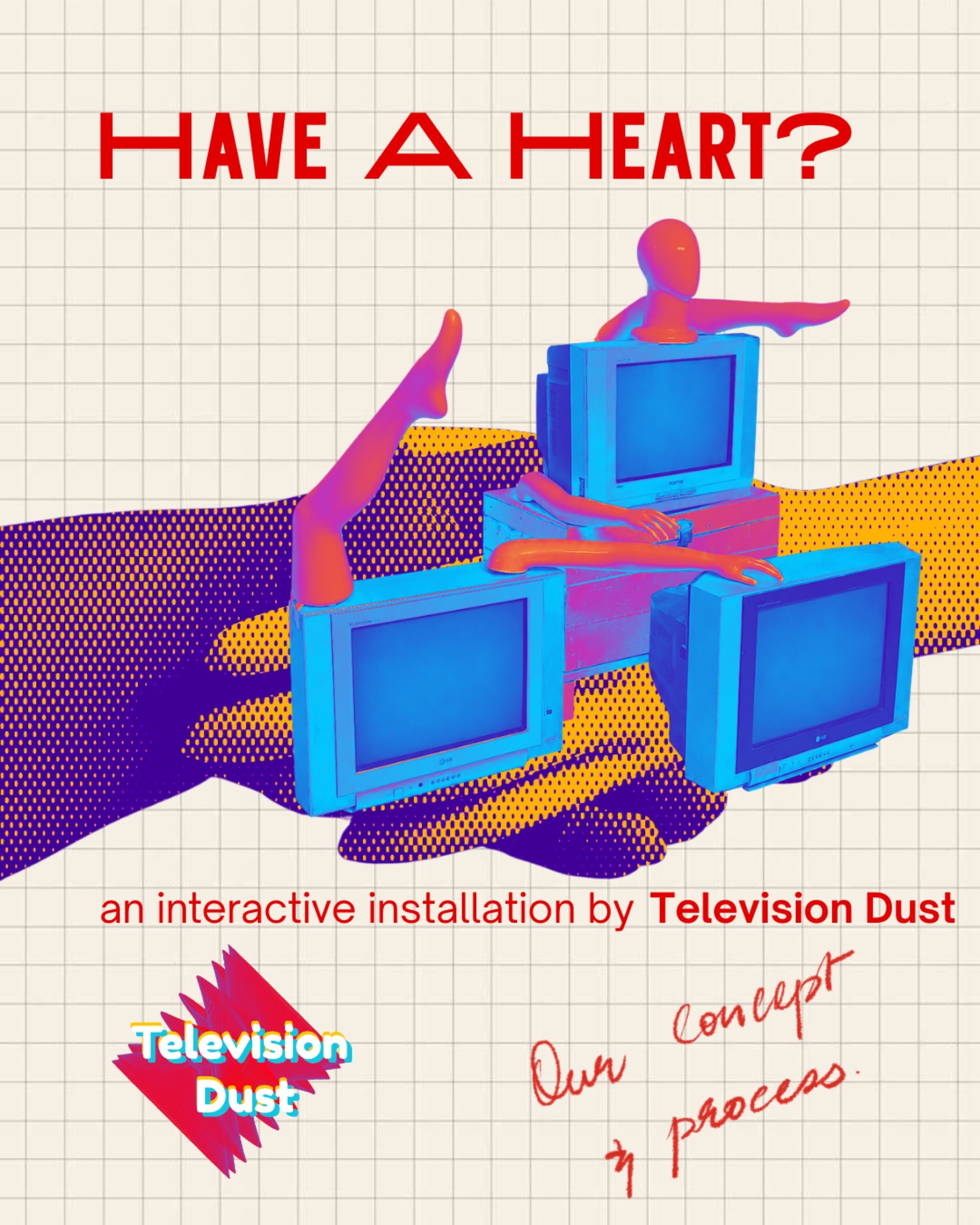
Have A Heart? explores technology as a space for connection rather than distance. Presented at The Angular Festival in May 2026, three CRT televisions, mannequin limbs and a heart-rate sensor form a system that only fully activates through human touch.
When a viewer holds one of the mannequin hands, their pulse becomes part of the work, causing the visuals to awaken and intensify. The viewer completes the circuit, briefly lending life to the machine.
The piece draws a parallel between electronic circuits and human communities: systems that depend on connection and energy exchange. Through responsive visuals and fragments of text that appear to speak directly to the viewer, the work looks for tenderness and humanity reflected back through the machine.
Circuits may mirror human communities, but our reliance on one another cannot be replaced by a machine, because what is a machine without a heart?